The Quiet Shift: Why More Teachers Are Rethinking the Second Income — Without a Second Shift, and Without Ever Being On Camera
By Marcus Reid 5 min read
Affiliate disclosure: This article contains affiliate links. We may receive a commission if you purchase through one of these links, at no additional cost to you

For years, my evenings looked the same. A pile of books to mark on the kitchen table. A lesson plan half-finished on the laptop. And behind it all, the same quiet arithmetic running in the back of my head: the pay isn’t going to change, but everything else keeps getting more expensive.
If you teach, you know that maths. It doesn’t arrive as a crisis. It hums along in the background — at the supermarket, at the petrol pump, on Sunday nights — a low-grade pressure that never quite resolves.
And here’s the part most side-income advice never acknowledges: knowing you need more money doesn’t create more hours. Teaching had already taken mine. There was always more to do and never anything taken away. Whatever was left at nine o’clock belonged to my family — and even then, I often wasn’t my full self with them.
So when people cheerfully suggested I “pick up a side hustle,” what I actually heard was: work a second shift.
The obvious options — and what they actually cost
I did look. Properly.
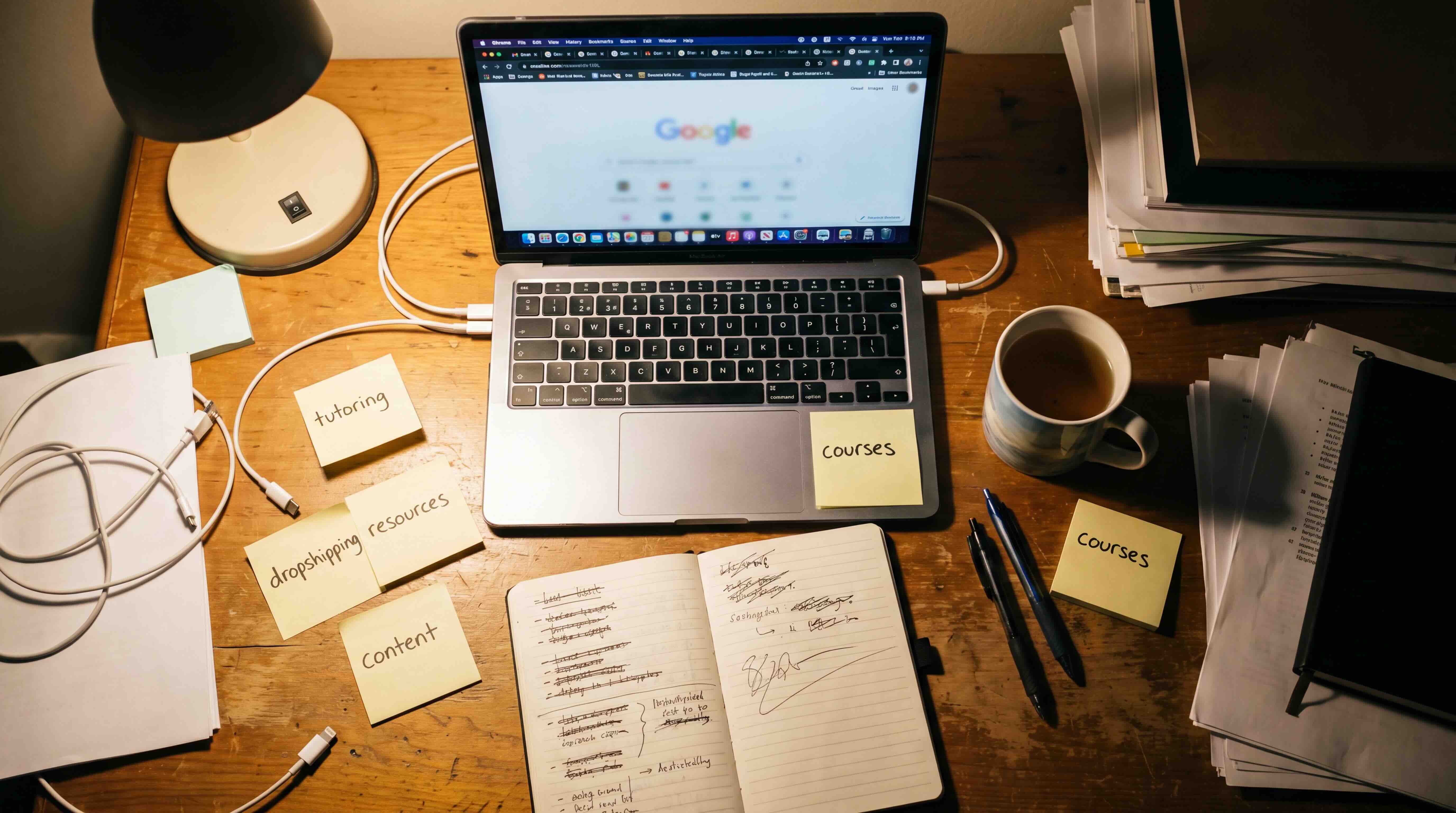
Tutoring first, because it’s the one everyone recommends to a teacher. And tutoring is real income — but be honest about what it is. More tutoring hours just meant trading more evenings for the same hourly trap I was already in. ⚡ I’d have been swapping marking at my own kitchen table for somebody else’s kitchen table. Same clock. Same exhaustion. Different postcode.
Selling teaching resources online came next. The marketplaces are real, but they’re crowded — and the honest version of that path is hundreds of unpaid hours of formatting, uploading and marketing before anything moves. With the hours I had, that was a bet I couldn’t afford to place.
Then the online courses. Dropshipping, affiliate marketing, “faceless” content channels. Different names, same catch underneath: every option I found asked me to become something else first — a marketer, a video editor, a personal brand — before it would pay me anything.
And for a teacher, one of those asks isn’t just tiring. It’s risky.
The part nobody warns you about
Most of those models eventually want your face. Filming yourself. Posting daily. Building an audience under your own name.
Most schools have social media policies. Parents find you. Pupils definitely find you. The idea of putting my face online, publicly, tied to a “business,” felt less like a side income and more like a professional liability I couldn’t undo.
That isn’t a confidence problem, and it isn’t a lack of ambition. It’s a professional constraint that almost no side-income advice takes seriously — because almost none of it is written for teachers.
So I did what most of us do. I closed the tab and went back to the marking.
What I got wrong for a long time
I assumed the problem was me. Not enough time. Not technical enough. Hadn’t found the right idea yet.
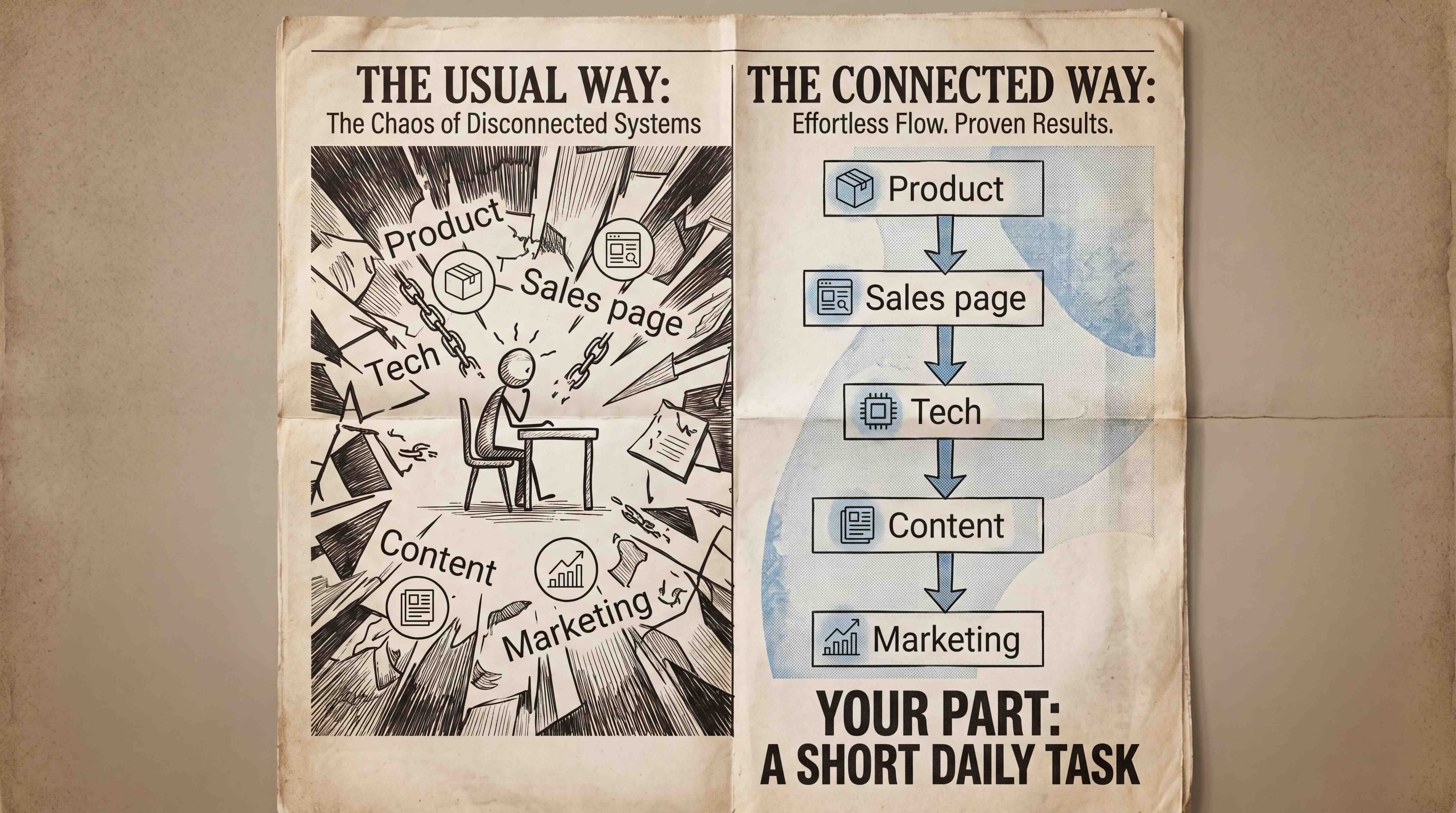
It wasn’t. The problem was the shape of the models. Every one of them was a bundle of disconnected jobs — build the product, write the sales copy, learn the tech, film the content, run the marketing — dropped on top of a full-time teaching load. Of course they don’t survive term time.
The shift, when it finally came, wasn’t a new tool or a burst of motivation. It was realising that the AI tools everyone talks about are only useful inside a system — one where the offer, the content, the sales process and the support are already connected, rather than something you have to assemble yourself out of tutorials.
Teachers, of all people, should recognise that. We don’t hand a class a pile of loose worksheets and call it a curriculum. Structure is the difference between effort and progress.
This is why Room30 caught my attention
Room30 is built the opposite way round from everything else I’d looked at. Instead of teaching you to assemble a business out of parts, it starts from a system that already exists, and hands it over.
The centrepiece is what they call an AI influencer: a digital persona, built for you, that fronts the business so your own identity never has to. The products it promotes are already created and vetted. The sales pages and the back-end are already in place.
Your part is a short daily task — publishing simple, faceless content with the persona — which Room30 designs to fit inside half an hour.
Which means the three things that had stopped me were, quite specifically, gone:
• No public identity. The persona is the one on camera, so you never are. Nothing for a colleague, parent or pupil to find.
• Nothing to build from scratch. The offer, the pages, the process — already connected, already working as one system.
• No tech curriculum. The setup is done for you. If you can follow a scheme of work, you can follow this.
You’ll be taken to Room30’s official website.
What I’m not going to tell you
I’m not going to tell you this is effortless, and I’m not going to wave income screenshots at you. You’ve seen enough of those — and your scepticism about them is one of the most sensible instincts you have.
What I’ll say is narrower, and more useful: this is the first model I’ve come across that was actually shaped around the constraints of a working teacher — no spare evenings, no public profile, no appetite for another learning curve — rather than pretending those constraints don’t exist.
Whether it’s right for you is a judgement only you can make, and the only honest way to make it is by looking at the mechanism itself. Room30’s own page walks through the full system, the training, the support and the current offer — those details are theirs to show properly, not mine to paraphrase.

The ten-minute version
If any of this has been circling for a while — the Sunday-night maths, the tutoring you can’t face taking on, the accounts you’d never dare open under your own name — the useful next step isn’t another course, and it isn’t another year of thinking about it.
It’s ten minutes with the system itself. See how it’s built. See what your day would actually involve. Then make your own judgement — the same way you’d tell your pupils to.
You’ll be taken to Room30’s official website.